The Power of Coregulation and Connection

Have you ever had a hard day and felt better after venting and connecting with a friend or family
member? You were coregulating and it shouldn’t come as a surprise that your kids need that too!

Coregulation is a process by which adults and children regulate their emotions and behaviors
together. While adults are able to manage their emotions and “use their words”, children are still
learning this skill! When a child becomes overstimulated or overwhelmed by emotions, they
can’t access the logical part of their brain like an adult can, meaning they lose the ability to use
words or learned coping strategies, resulting in a meltdown. In a meltdown, children are not
always “hearing” what is being said to them; they respond more to body language and facial
expressions versus words or prompting. A meltdown isn’t the time to control or dictate a child’s
behavior, but instead is a time to create a supportive environment where the child feels safe and
understood. By focusing on connecting with the child, we can help them manage their emotional
and physiological state.

Why is Coregulation Crucial in Occupational Therapy?

  • Building Trust and Security: Coregulation provides a consistent and responsive relationship that builds trust. When a child feels secure and understood, they are more likely to be able to participate fully in therapy sessions.
  • Enhancing Emotional Regulation: Through coregulation, children learn to recognize and manage their own emotions. It is important for the trusted adult to model appropriate responses and coping strategies to help the child develop their own tools for managing stress, frustration, or even excitement.
  • Facilitating Engagement and Learning: When children are regulated, they are better able to focus, follow directions, and participate in daily activities. Coregulation helps to create an optimal state of arousal where children can be both calm and alert, making learning and skill acquisition more effective.

How Can I Use Coregulation At Home?

  • Modeling Calm Behavior: By remaining calm and present, you can provide a model for children to emulate.
  • Using Sensory Tools: Incorporating sensory activities like weighted blankets, calming music, or bubbles can help regulate a child’s sensory system.
  • Responding to your child’s cues: Pay close attention to your child’s cues and adjust activities to support their needs. For example, if you can tell your child is already frustrated, it’s probably not the best time to ask them to learn or practice a new skill!
  • Have empathy: Remember that your child doesn’t WANT to have a meltdown. It is their attempt to connect and get help the only way they know how to in the moment. They are still learning and are doing the best they can!

By Michelle Beckwith, OTR/L
Handwriting Readiness

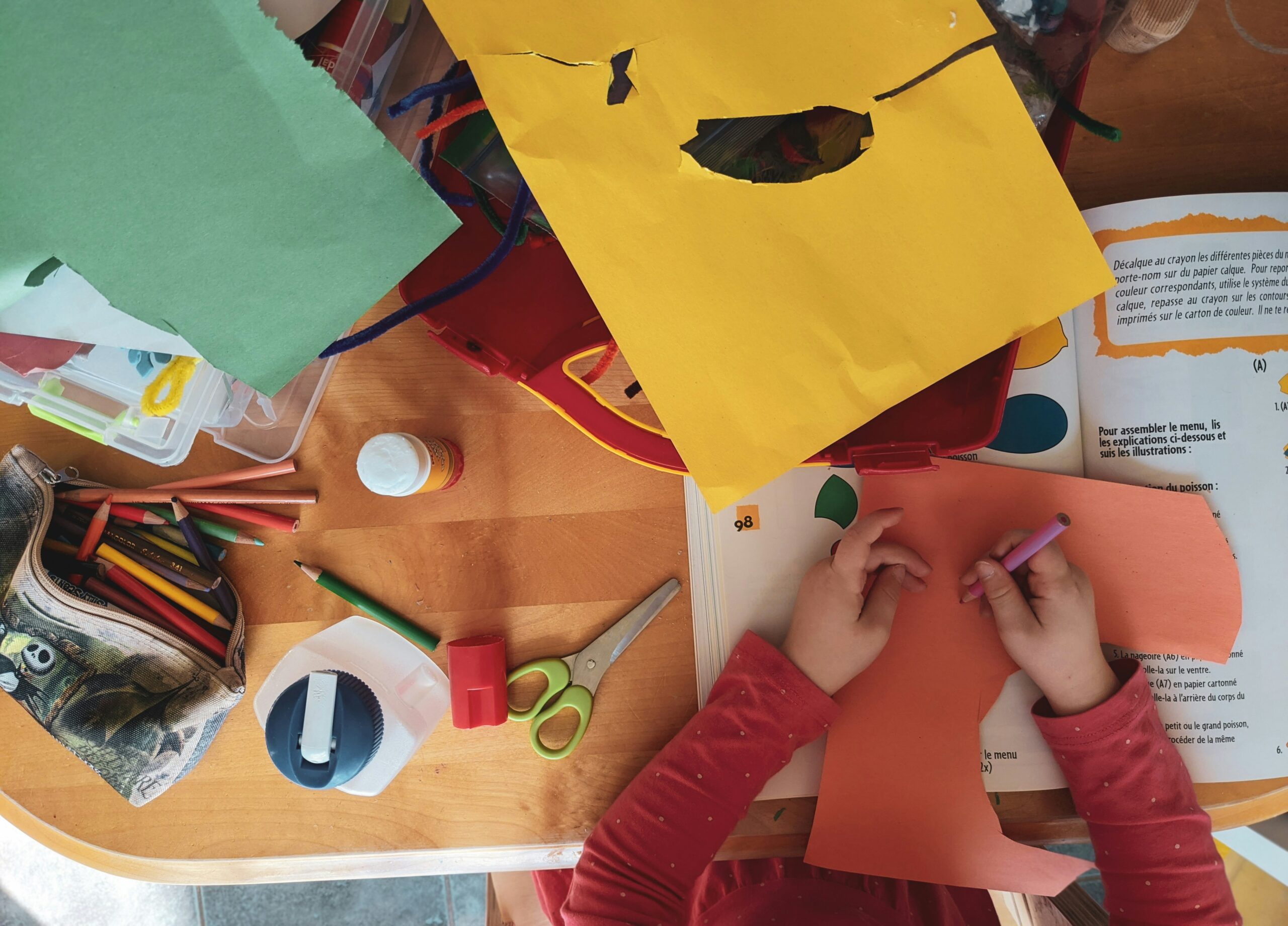
Handwriting readiness is a crucial part of a child’s development, involving fine motor and visual motor skills, which are essential for writing and dressing skills, like buttoning and zipping, that support their overall participation in school and activities of daily living. 

Fine Motor Skills 

Fine motor skills involve the small muscle movements in the hands and fingers that allow children to hold and manipulate writing tools effectively.

Children’s grasp of writing tools will change as they grow. By 4-5 years old, most children should be using a more mature grip. Here’s a timeline:

  • 1-2 years: Fisted grip (holding with their whole hand).
  • 2-3 years: Digital pronate grasp (holding with fingers pointing down, thumb up).
  • 3-4 years: Static tripod grasp (holding with three fingers, but using the whole hand to move the pencil).
  • 4-5 years: Dynamic tripod grasp (using three fingers with wrist and fingers moving independently for control).

Visual Motor Skills

Visual motor skills are essential for using scissors and making pre-writing lines, as they involve coordinating what the eyes see, with how the hands move. 

Children typically begin using scissors around 2-3 years old, starting with simple snipping. Here’s a timeline:

  • 2-3 years: Snipping paper and cutting along straight lines.
  • 3-4 years: Cutting out simple shapes like circles and squares.
  • 4-5 years: Cutting more complex shapes

Practicing pre-writing lines is crucial before learning handwriting because it helps children develop the fine motor skills and visual motor coordination needed to form letters and write neatly. Here’s a timeline:

  • 2-3 years: Scribbling and imitating horizontal lines, vertical lines, and a circle
  • 3-4 years: Copying simple lines, a circle, and imitating a cross
  • 4-5 years: Copying a square, cross, triangle, diagonal lines, and an ‘X’

Fun At-Home Activities to Boost Your Child’s Visual and Fine Motor Skills

  • Practice drawing pre-writing lines, shapes, and letters in sensory bins filled with rice, shaving cream, or sand
  • Use playdough or wikki stix to create different shapes, lines, and letters
  • Use broken crayons when coloring/drawing to help initiate a proper grasp 
  • Use large or small beads to string on a shoelace, pipe cleaner, or string
  • Rip paper to make crafts at home and practice opening and closing markers and glue sticks

By Allie Calcagno, OTR/L

OMG, it’s an OMD!

What is an oral motor disorder?

Difficulty with the function of the muscles and structures involved in speech and feeding

May be the result of:

  • A physical, structural issue such as cleft palate or tongue-tie
  • Prolonged pacifier or sippy cup use, which interferes with natural oral development
  • Injury
  • Fetal Alcohol Syndrome
  • A neurological condition such as cerebral palsy and Down syndrome which includes issues with muscle tone, resulting in dysarthria

Signs of an oral motor disorder include:

  • Droopy or “long” face with mouth that frequently hangs open
  • Drooling past the age of 18 months
  • Speech which is difficult to understand
  • Lisped speech
  • Difficulty sticking out tongue or moving it from side to side
  • Difficulty producing certain consonants or deleting them past age 3
  • Refusal to eat certain foods, especially meat or other tough foods to chew
  • Frequent gagging when eating
  • Open-mouth breathing (may be only when sleeping) and/or snoring

Key components affected by oral motor disorders include:

  • Articulation:  Difficulty in coordinating and controlling the movements of the lips, tongue, and jaw which can lead to reduced intelligibility
  • Chewing:  Challenges chewing and manipulating food in the mouth
  • Swallowing: Difficulty with coordinated and sequential movements required for safe and effective swallowing
  • Facial Expression:  Limited control over facial muscles, impacting facial expressions and non-verbal communication

If you suspect that your child may have an oral motor disorder which is impacting articulation and/or feeding, it is important to seek treatment with a speech-language pathologist and/or occupational therapist.  We are here to help!

By Kathleen Winger, M.S., CCC-SLP

Poop is a funny word:  Resources for Toileting

Toileting, or as more commonly known as potty training, can be a challenging endeavor for children. Toileting is a complex task which requires many skills such as executive functioning skills including sequencing, sensory processing skills such as interoception, motor skills such as reaching and grasping, balance, dressing skills and so much more. However, occupational therapists are here to help with this challenge. Throughout this post, there will be a multitude of different books to read with your child to help improve their ability to toilet! 

The first few books cover the science behind using the bathroom, exciting stuff, right? Well, using books to break down a basic task can help a child understand the process a little bit more and why it is important for our bodies. 

“From Chewing to Pooing: Food’s Journey Through Your Body to the Potty” by Lauren Gehringer & Dr. Natalie Gehringer

The first book is called, “From Chewing to Pooing: Food’s Journey Through Your Body to the Potty” by Lauren Gehringer & Dr. Natalie Gehringer. This book talks about digestion in a fun way for children to understand. A child may feel fear surrounding using the bathroom, so learning more about the task can ease toileting anxiety. 

“See Inside Your Body” by Colin Daynes and Katie King

The second book titled, “See Inside Your Body” by Colin Daynes and Katie King is a book to help children understand the organs involved with digestion. The more children can understand the process of digestion, the less pressure there may be surrounding using the bathroom. It also contains a lot of fun flaps to lift up and down to learn a little bit more about the body. Through learning more about the body, children can better understand interoception. Interoception is the sensory information people receive from their organs that lets them know if they are hungry, thirsty, sick, or need to use the bathroom. 

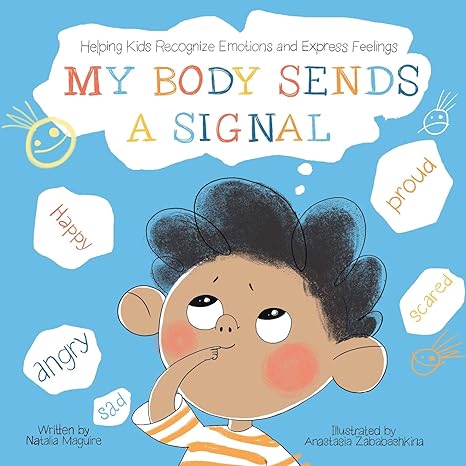
“My Body Sends A Signal: Helping Kids Recognize Emotions and Express Feelings” by Natalia Maguire

The next book helps children learn more about interoception. The book titled, “My Body Sends A Signal: Helping Kids Recognize Emotions and Express Feelings” by Natalia Maguire teaches about the body sending us different messages and what these messages might mean. While this book focuses a lot on bodily cues related to emotions, it is still a valuable book for children to explore to learn more about how their body can send different signals such as their belly hurting or feeling like there are ‘ants in their pants’. 

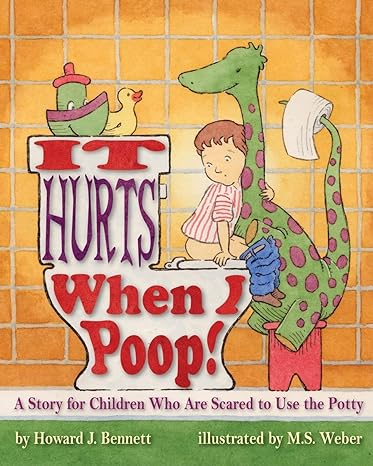
“It Hurts When I Poop: A Story for Children who are Afraid to Use the Potty” by Howard J. Bennett, M.D.

The last two resources or children’s book shared in this blog post focus more on constipation, which is the build up of hard stool inside the colon that is difficult to pass. Constipation is a common problem that affects a lot of children. Some children may find using the toilet aversive because of constipation. So here are a few books below to help a child defeat the potty time blues.

The first book is titled, “It Hurts When I Poop: A Story for Children who are Afraid to Use the Potty” by Howard J. Bennett, M.D. In this book it follows a main character who experiences constipation in an easy to understand format for kids. It also includes a “poop program” for parents to help their child through this process. 

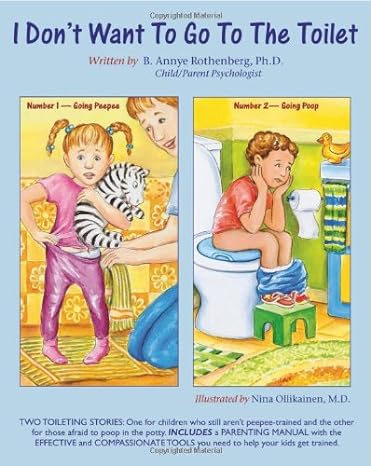
“I Don’t Want to Go To the Toilet” by B. Annyne Rothenberg, Ph.D.

The last book included in this post is titled “I Don’t Want to Go To the Toilet” by B. Annyne Rothenberg, Ph.D. which is a great guide for parents to use throughout the process of potty training, especially if there is a youngster who is having a hard time with this skill. 

For more specific information regarding your child’s toileting success, reach out to your child’s occupational therapist. We are here to help, even if it stinks!

By Kat Danella, OTD, OTR/L

Childhood Occupations and How OT Supports Them

April is Occupational Therapy Month!

April is occupational therapy month! It is a month to celebrate occupational therapists and their work to make a difference in the lives of their clients. In pediatrics, occupational therapists support kids in the various occupations that they engage in. 

In occupational therapy, occupations are anything clients value and spend their time doing to make their lives more meaningful. In pediatrics, these occupations generally fall under the following categories: 

Activities of Daily Living (ADLs)

ADLs are basic self-care activities that include feeding, bathing, getting dressed, toileting, and more. The expectations regarding these activities change as a child grows. Still, through play and fun activities during our sessions, pediatric OTs work on supporting a child’s independence in age-appropriate activities. 

Instrumental Activities of Daily Living (IADLs)

IADLs support independent living skills in the community. These activities include meal preparation, chores, and transportation, to name a few. Supporting the skills needed to complete these activities is essential for a pediatric OT. 

Rest and Sleep

Rest and sleep are essential occupations that support children and their development. If they aren’t getting appropriate sleep, they can struggle to maintain a proper level of arousal to support engagement with their other occupations. Occupational therapists can help families set up a sleep routine and meet sensory needs for appropriate sleep, among other things. 

Education

Education consists of being able to engage in a variety of learning activities. OTs support skill-building and environmental adaptations to allow children to access their education to the fullest extent possible. 

Play

Play is the primary occupation for young children. They learn through play and build a majority of their skills through play. Occupational therapists help children engage in meaningful play and support their self-regulation skills through play. As pediatric OTs, play is the primary way we treat and engage with children. 

Social Participation

Social participation is another primary way children interact with their environment. It is how they interact with their peers and those around them. OTs support a child’s regulation and skills to engage in appropriate social participation. 

Occupations are not just work; they play a significant role in everyday life for everyone, including children. During April, if you encounter an occupational therapist, thank them for helping their clients engage in meaningful occupations and activities. 

References: 

American Occupational Therapy Association. (2002a). Occupational therapy practice framework: Domain and process. American Journal of Occupational Therapy, 56, 609–639. https://doi.org/10.5014/ajot.56.6.609

By Erin Christensen, OTD, OTR/L

Nine Key Points for Understanding Your Insurance Coverage

Parenthood is a rewarding journey, but it also comes with its fair share of responsibilities. One
crucial aspect of ensuring your family’s well-being is understanding your insurance coverage.
Here are key points parents should know about their insurance:

1. **Check Your Insurance Plan:**

Start by looking at your insurance plan to see if it covers speech and occupational therapy
for your child. This information is usually in the benefits section of your plan. Contact your
insurance if you have any questions about what is covered and what is not.

2. **Kid-Friendly Therapists:**

Find out if the therapists you’re considering are approved by your insurance. This helps you
save money because in-network therapists often cost less.

3. **Get a Doctor’s Opinion:**

Talk to your child’s doctor and ask them to make a referral. Sometimes insurance needs this
information before they allow for session coverage.

4. **Know the Limits:**

Some insurance plans have rules about how many sessions your child can have or the
length of time a child can attend. Check if there’s a limit so you’re not surprised later.

5. **Ask About Pre Approval:**

Before starting therapy, ask your insurance company if you need pre approval. It’s like
getting a green light before you go.

6. **Money Stuff:**

Check if you need to pay anything upfront, like copayments or deductibles, before insurance
kicks in. Knowing this helps you plan financially.

7. **Fixing Denials:**

If insurance says no to a claim, don’t panic. There’s often a way to fix it. Find out how to
appeal so your child can keep getting the help they need.

8. **School Services:**

Check with your child’s school. Sometimes they offer therapy too. It might be a good option
and could have different insurance rules.

9. **Keep Talking:**

Communication is key. Talk to your insurance, the therapists, and your child’s doctor.
Everyone working together helps make sure your child gets the best care.

Understanding insurance coverage for speech and occupational therapy might seem tricky at
first, but taking these steps can make it easier for you and your child to navigate. It’s all about
making sure your little one gets the support they need to shine!

By Shauna Oakes, Administrative Director

Valentine’s Day Activities for Speech and OT

As Valentine’s Day approaches, we’re excited to share some heartwarming and therapeutic activities that not only celebrate the season of love but also contribute to the growth and development of our clients. Join us on this journey of combining affection with effective therapy!

Speech and Language Therapy

Valentine’s Day provides a unique opportunity to explore the language of love. Speech and language therapy can be both educational and enjoyable as we engage our clients in activities that focus on expressing emotions, social interactions, and building meaningful connections through communication.

Activity Ideas:

  • Love Letter Writing: Encourage clients to express their feelings by writing or dictating love letters. This activity enhances language skills and emotional expression. 
  • Conversation Hearts Challenge: Use conversation hearts candy with words or phrases related to communication goals. Clients can create sentences or engage in conversations using these sweet treats.

OT- Sensory

Occupational therapy often involves sensory activities that stimulate and enhance sensory processing. This Valentine’s Day, let’s explore sensory-rich experiences that promote engagement and development.

Activity Ideas:

  • Scented Sensory Bins: Create sensory bins with Valentine-themed scents like roses, chocolate, or strawberries. Clients can explore different textures and engage their senses.
  • Heart-shaped Stress Balls: Make heart-shaped stress balls filled with different textures to provide tactile stimulation. This activity is great for hand strength and stress relief.

OT- Fine Motor Fun

Fine motor skills are crucial for daily activities, and what better way to practice than with Valentine-themed fine motor activities?

Activity Ideas:

  • Valentine’s Day Crafts: Engage clients in crafting activities like making heart-shaped cards, cutting out paper hearts, or creating tactile crafts. This enhances fine motor coordination.
  • Cupid’s Arrow Game: Use a bow and arrow game to target various objects. This activity improves hand-eye coordination and fine motor precision.

Valentine’s Day is not just about chocolates and flowers; it’s about fostering growth, connection, and joy through therapeutic activities. We invite you to join us in celebrating the language of love and the development of essential skills that make every day special for our clients. Happy Valentine’s Day!

By Amy Rawlings, MA, CCC-SLP

Holiday Gift Guide & Events

Tis the season for decking the halls and all the fa-la-las! With the holidays right around the corner, parents may be seeking gift suggestions to work on progressing therapy goals and bringing the fun of occupational and speech-language therapy to your home. While this gift guide may help to give your children presents that can help them practice their speech and occupational skills in a fun and unique way – the best gift for your children is quality time together. Ditch the toys with batteries, flashing lights, and loud noises and opt for something that encourages creativity and play!

Sensory Toys

Squish, build, mold, and play! Sensory toys are particularly enjoyable for children with autism due to their sensory processing needs. Sensorimotor toys can help alleviate these needs by stimulating or calming the senses and can facilitate communication and occupational success. In occupational therapy, you can expect to find toys and games that support development such as motor planning, coordination, balance, fine and gross-motor skills, and problem solving. Some of our occupational therapists’ favorite OT toys include:

Movement-Based Activities

Toys and activities that get us up and moving are great for facilitating language development and are especially wonderful for our friends with sensory needs! These toys can also be very useful for improving fine and gross-motor skills. We recommend small trampolines, swings, building blocks, and train sets to get our kiddos moving during at-home play. 

Pretend Play

Open-ended toys (more than one way to play with the toy) allow your child to build their imagination and creativity while targeting therapy goals. When you follow your child’s lead they will be more motivated to interact because it feeds into their unique interests and abilities.

Animal Toys

Some of the most engaging toys are centered around our furry friends. Animal toys and games are a fun and versatile way to target nearly therapy goals and help foster language development. Engage your child by making early developing sounds (moo, baa, woof, ink, grr), practice new words through play (dinosaur…hungry dinosaur…dinosaur eats), work on following directions (bunny is jumping, kitty is running), and modeling new phrases (cow says moo). This low pressure activity is functional and gives them endless possibilities for fun.

Sensory-Friendly SmallTalk Holiday Events

What: Sensory Santa East County

Where: SmallTalk Speech & Occupational Therapy, 260 E Chase Ave Ste 204 El Cajon, CA

When: Sat Dec 02 2023 at 9:00am to 1:00pm

What: Sensory Santa North County

Where: SmallTalk Speech & Occupational Therapy, 12030 Scripps Summit Dr, Suite A

San Diego, CA 92131

When: Sat Dec 09 2023 at 9:00am to 1:00pm

By Madison Trussell, M.S., CCC-SLP

How Should My Child Swing? Intensity of Vestibular Input    

Swinging, or any kind of movement, provides input to the vestibular system. There are a variety of types of vestibular input, as well as the impact that it has on a person. This can vary depending on how their sensory systems process the information. Our vestibular system gives us information about movement and where our head is in relation to gravity. The vestibular system provides us with information about the speed and direction of our movement. This system provides the foundation for our balance reactions and has a strong connection to our postural control. There is also a connection between the vestibular system and a child’s ability to self-regulate. Depending on the type of vestibular input received, the effect on a child’s brain can be calming, organizing, or altering. The more intense the type of vestibular input, the more alerting the input will be for the child. 

Depending on the child’s threshold for vestibular input, they may require a more intense type of vestibular input in order to register the input. For a child that is under-responsive to vestibular input, that child may need more intense vestibular input such as spinning or swinging in an orbital motion. Some children may also benefit from having their head inverted or being upside down for an increased registration of the vestibular input. For children who are over-responsive to vestibular input, starting with lower levels of input such as up and down (vertical) or front to back (linear) can help increase their tolerance of vestibular input.

Levels of Vestibular Input in Order of Increasing Intensity

1. Up and Down Movement

2. Front to Back Movement

3. Side to Side Movement

4. Diagonal Movement

5. Arc Movement

6. Spinning

7. Inversion (upside down)

High Level of Arousal Protocol: 

  • For children with high levels of arousal the goal of swinging is to provide the sensory system with calming input. 
  • Children with high levels of arousal often respond best to slow, predictable, and rhythmic movement. 
  • Giving your child the ability to self direct their vestibular input may be beneficial in bringing them to the optimal level of arousal.
  • Rhythmic front to back or side-to-side movement can provide calming input to the child.

Low Level of Arousal Protocol: 

  • For children with low levels of arousal the goal of swinging vestibular input is to alert the sensory system. 
  • Children with low levels of arousal often respond to vestibular input that is unpredictable, fast, and angular. 
  • Some children may respond best to input that is received in side lying, rather than in upright. 
  • Spinning can provide alerting input to the child to bring them to optimal level of arousal. 

By Erin Christensen, OTD, OTR/L

Tips for Stuttering and the Holidays

For many people, October-December is the most wonderful time of the year filled with good food and company. But for others, this time of the year can be busy and stressful, overfilling our internal buckets. This bucket analogy is frequently used by stuttering specialist, Dr. J. Scott Yaruss, and illustrates the idea that many factors can affect stuttering, including child factors (genetics, temperament), interpersonal stressors (life changes, fast-paced lifestyle), and communicative stressors (competition for talking time, frequent interruptions). We like to encourage families to try to lower the level of the bucket, since we all communicate best under the least amount of stress and pressure.


Here are some practical ways to try to pour out some of the bucket’s contents when it gets filled
with the uncontrollable holiday bustle:

1. Include some space and time for quiet as a family

When our homes are filled with family and friends, especially those we haven’t seen in a while, conversations can be found at every corner. This can take a toll on those who stutter who might not enjoy, and may even anxiously anticipate, constantly conversing. Before a big gathering…

  • Do: Enjoy leisure activities together that don’t require as much talking like coloring, reading, puzzles, legos, play-doh, etc.
  • Try to avoid: Activities that encourage pressure, speed, and are verbally taxing such as competitive board games.

2. Keep the joy, lower the excitement

Children may have a more difficult time speaking when worked up in either a positive or negative way. Still speak about the great time that will be had during the holidays, but try to limit ramping up emotions and building a lot of anticipation.

  • Do: Speak positively “I love getting to try so many different kinds of candy on Halloween.”
  • Try to avoid: Speaking to heighten emotions “Aren’t you excited to show off your new costume?!”

3. Practice stressful areas

You know your child best, and when and where they communicate their best. You know if your child is a perfectionist, and can anticipate that when other children come over, win games and take toys, yours may be very thrown off. Or, you may know your child to be on the shyer side making trick-or-treating a difficult activity. Practicing these scenarios with people that are familiar to the child and in a controlled environment can help transfer readiness and emotional preparedness for the more spontaneous encounters.

  • Do: Talk about emotions! Encourage losing and still having fun. Talk about how nice it feels when your child shares a toy with you. Practice knocking on bedroom doors and saying “trick or treat!”. Have your child switch roles with you in each scenario to be the winner/loser, sharer/taker, etc.
  • Try to avoid: Rewarding only winning and reacting negatively when things don’t go perfectly.

4. Encourage and advocate

Our children may be meeting visiting guests for the first time, who may bring up that they stutter. This is a great opportunity to advocate for your child and to address the situation head on. Speaking openly and positively about stuttering helps children feel empowered to be themselves, and reduces the chance of children developing avoidance behaviors.

  • Do: Learn about stuttering with your child (myths/facts, famous people who stutter, etc.) to build their confidence and eliminate negative associated feelings about stuttering. Acknowledge the stutter, acknowledge that he/she/they is/are trying to find strategies to speak smoother through therapy, talk about your child’s strengths.
  • Try to avoid: Avoiding the conversation of stuttering and using vocabulary that portrays it as negative such as “fixing” or “correcting” it.

Feel free to reach out to your Speech-Language Pathologist for additional suggestions relevant to your child and their plan of care. For more stuttering related-resources, check out stutteringtherapyresources.com.

By Mariel Manuel, MS, CCC-SLP

Link copied to clipboard!