Many of our families across San Diego county, in La Mesa, Mission Valley, and Scripps Ranch often ask what speech therapy really looks like and how to know if their child might benefit. This month is National Speech-Language-Hearing Month, so it is the perfect time to highlight the role of speech-language pathologists (SLPs) and the many ways they support children and families.
When most people think of speech therapy, they think of helping children pronounce words more clearly. While that’s certainly part of it, speech-language pathologists do much more. They support how children understand language, express themselves, interact socially, and even how they eat and drink safely.
At its core, speech therapy is about helping children connect with the world around them in a way that feels successful and meaningful.
What Does a Speech-Language Pathologist Do?
A speech-language pathologist is trained to evaluate and treat a wide range of communication and feeding challenges. For children, this often includes supporting:
- Speech sound development, such as articulation and clarity
- Language skills, including understanding and using words and sentences
- Social communication, like taking turns, initiating interaction, and reading social cues
- Early communication, including gestures, play, and first words
- Feeding and oral motor skills when eating or drinking is difficult
Rather than focusing on just one skill, SLPs look at the whole picture of how a child communicates in their daily life.
What Does a Speech Therapy Session Look Like?
One of the most common questions parents have is, “What actually happens in a session?”
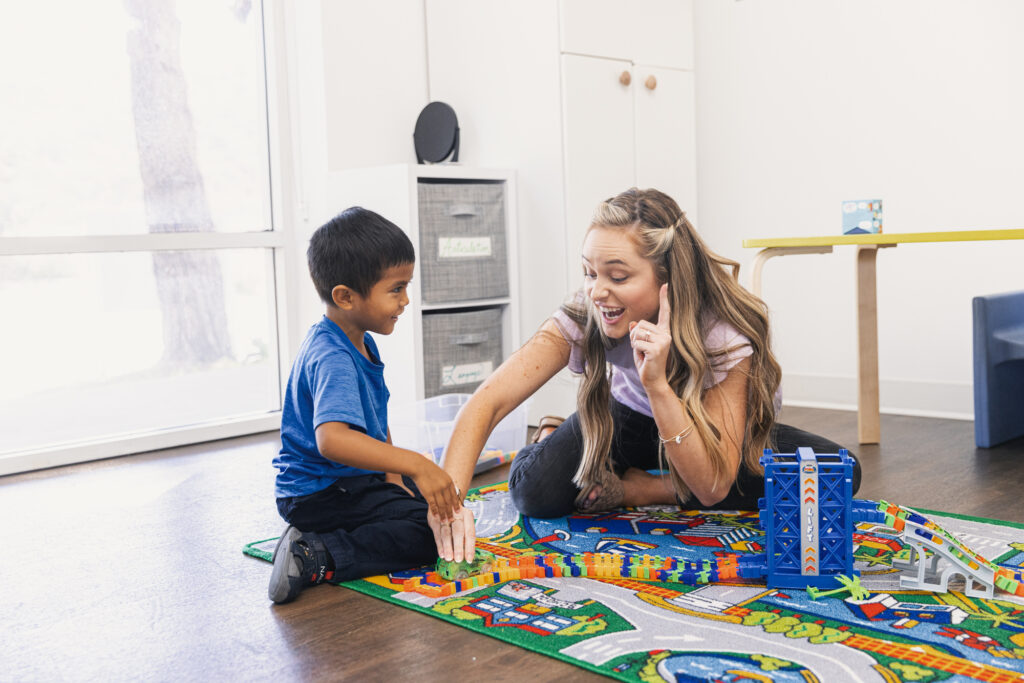
For young children, therapy rarely looks like sitting at a table doing drills. Instead, it’s play-based and interactive. An SLP might be on the floor playing with toys, reading a book, or engaging in a simple game while intentionally targeting communication goals.
A session may include:
- Following the child’s lead in play to encourage communication
- Modeling words, phrases, or sounds in a natural way
- Creating opportunities for the child to request, comment, or interact
- Expanding on what the child says to build longer phrases
- Coaching parents on how to support these skills at home
For older children, sessions may become a bit more structured, but they are still designed to feel engaging and relevant. Activities might include conversation practice, storytelling, problem-solving tasks, or games that target specific speech and language goals.
No two sessions look exactly the same because therapy is always tailored to the individual child.
What Kinds of Children Can Speech Therapy Help?
Speech therapy supports a wide range of children, from toddlers just starting to talk to school-age children working on more complex communication skills.
SLPs commonly work with children who:
- Are late to start talking or have a limited vocabulary
- Have difficulty being understood by others
- Struggle to follow directions or understand language
- Experience frustration when trying to communicate
- Have challenges with social interaction or play
- Have diagnoses such as autism spectrum disorder, developmental delays, or speech sound disorders
- Have feeding or oral motor difficulties
Some children may need short-term support, while others benefit from longer-term therapy as they continue to build and refine their skills.
Why Early Support Matters
Communication skills develop rapidly in the early years. When children receive support during this time, it can positively impact not just speech and language, but also confidence, behavior, and social connection.
Early therapy doesn’t mean something is “wrong.” It simply provides children with the tools and support they need to build strong foundations.
A Collaborative, Family-Centered Approach
At SmallTalk Pediatric Therapy, we see parents and caregivers as an essential part of the therapy process. Progress doesn’t just happen during a 30-45 minute session. It happens in everyday moments at home, during meals, playtime, and daily routines.
That’s why speech therapy often includes coaching and collaboration, helping families feel confident in supporting their child’s communication throughout the day.

Celebrating the Impact of SLPs
National Speech-Language-Hearing Month is a time to recognize the meaningful role SLPs play in helping children find their voice.
Every new word, every clearer sentence, every successful interaction builds toward something bigger: confidence, connection, and the ability to be understood.
If you’re wondering whether speech therapy might support your child, it’s always okay to ask. Sometimes a simple conversation can provide the clarity and reassurance you need.
At SmallTalk Pediatric Therapy, we’re proud to support families throughout San Diego County, with clinics in La Mesa, Mission Valley, and Scripps Ranch, as well as virtual therapy options for added flexibility. Give us a call to learn more about our speech therapy services.