What Is Applied Behavior Analysis (ABA)? Discover ABA the SmallTalk Way

What Is ABA, Really?

Applied Behavior Analysis (ABA) is the science of how behavior works, applied to help children build skills that matter such as communicating a need or want, playing with a sibling or friend, tolerating a haircut, following a group instruction at school or during soccer practice, while reducing behaviors that get in the way of a child’s safety, learning, or connection. It’s not about reducing behaviors that are simply atypical.

At its core, ABA is the science of how people learn: why we do the things we do, and why we don’t. It breaks learning down into its smallest parts, which lets us understand exactly how an individual child is learning right now, and then teach them how to learn more effectively from the world around them.

Typically developing children are learning constantly, from the moment they wake up until the moment they go to bed, almost entirely by absorbing what’s happening around them. It’s why a child will pretend to put makeup on after watching their parent in the mirror, or why they pretend to make dinner after watching a parent make a meal, without being explicitly taught. 

Children with autism or other developmental disabilities often learn differently from that incidental, absorb-it-without-trying process, picking up fewer skills that way, not because something’s missing, but because their brains are wired to take in and process the world differently. ABA doesn’t try to override that; it helps build the skill of learning from the environment in a way that works with how this particular child’s brain already takes information in, by deliberately creating the same kinds of learning opportunities that would otherwise happen by accident.

In practice, that looks like:

  • A Board Certified Behavior Analyst (BCBA) assessing a child’s current skills and the specific behaviors a family wants to build or reduce.
  • A written plan with measurable goals, not vague aspirations, but targets that can be tracked session over session.
  • Reinforcement, access to something meaningful to the child, used to build new skills, not punishment used to suppress old ones.
  • Ongoing data collection so the plan changes when the data says it should, rather than staying on autopilot.

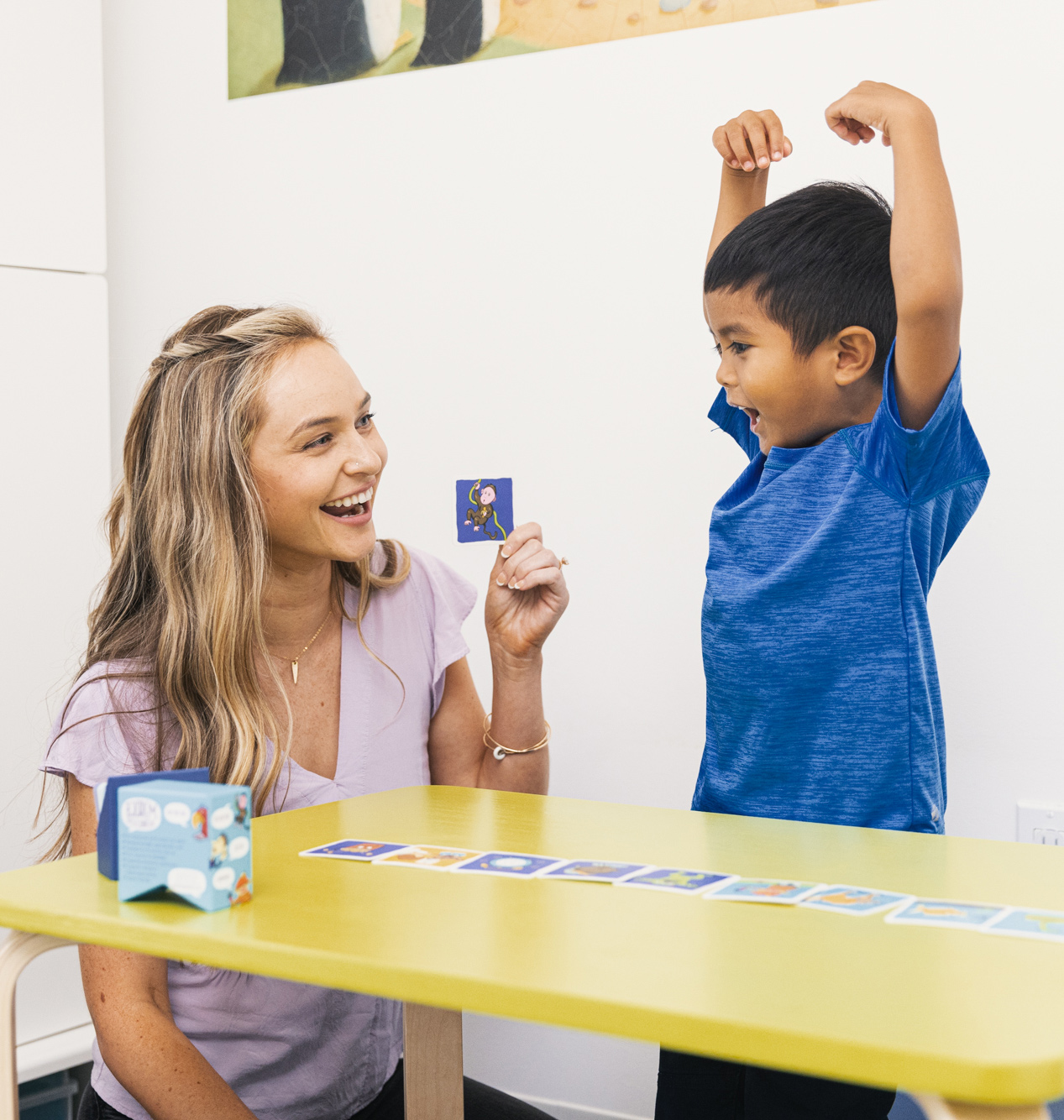
Done well, ABA doesn’t look clinical or rigid; it looks like play. A child should be learning, laughing, and having fun for the entire session, because engagement is what makes new skills stick. Sessions are also meant to be intensive but relatively short-term: the goal isn’t years of dependence on therapy, it’s building skills quickly enough that a child gains the tools to keep learning on their own, long after sessions end.

Modern ABA has evolved significantly from its early, outdated practices. Today, quality care is defined by two core commitments: it is assent-based and neuroaffirming.

What “assent-based” actually means

Assent-based care means therapy is done with a child, not to them. Consent is continuous and moment-to-moment rather than a one-time formality. If a child turns away or shows distress, we honor that as vital communication, not a behavior to extinguish. We explicitly teach children to protest or ask for a break, ensuring every request is respected. True assent-based care measures success by the child’s partnership and engagement, never by compliance.

What “neuroaffirming” actually means

Neuroaffirming care recognizes autism as a natural human difference, not a deficit to fix. Our goals prioritize a child’s wellbeing and independence over social conformity. We honor self-regulation behaviors like sensory-seeking behaviors and value all forms of communication, whether spoken, AAC, or gestures, as inherently valid and meaningful.

What Is ABA the Smalltalk Way?

Most ABA companies are built around one discipline. A BCBA writes a behavior plan, a team of technicians implements it, and if your child also needs speech or occupational therapy, you’re the one coordinating between three separate providers, three schedules, and three offices that may never speak to each other.

Smalltalk is built differently, and the difference isn’t a slogan: it shows up in three concrete places.

1. One plan, not three

At an ABA-only provider, your BCBA writes a behavior plan without input from a speech-language pathologist or occupational therapist, because there isn’t one on staff. At Smalltalk, the plan is built with input from ABA, speech, and OT before it’s finalized, so a communication goal and a behavior goal are never working against each other.

2. Staff who talk to each other on a schedule, not by accident

Ask an ABA-only provider how often your child’s therapist talks to your child’s outside speech or OT provider. Often the honest answer is “when a parent forwards an email.” At Smalltalk, the team meets on a recurring cadence about your child specifically, and that’s staffed as part of the job, not squeezed in.

3. One point of contact

When care is fragmented across providers, parents become the default project manager — relaying updates, resolving conflicting advice, deciding whose recommendation to follow when they disagree. Coordinated care means your family has one point of contact who can speak to the whole picture, not just their slice of it.

Learn More

Think ABA at SmallTalk might be right for your child? Fill out our interest list below and we will be in contact with you soon:

Why Clinic-Based Pediatric Therapy Often Outperforms In-Home Sessions

When your child needs speech-language therapy or occupational therapy, choosing the right setting can make a significant difference in their progress. While in-home therapy can feel convenient, many families are surprised to learn that clinic-based therapy often offers more advantages, both for the child’s development and for the family’s overall experience.

If you’re considering where your child should receive services, here’s why a clinic-based model may be the stronger option for long-term success.

1. Fewer Distractions, More Focus

Home environments are full of everyday distractions such as pets, siblings, television, and toys that aren’t part of therapy. These can make it harder for a child to fully focus on their goals. In a clinic setting, the space is purposefully designed for learning and engagement. Everything from the layout to the materials is tailored to help children stay on task and maximize each therapy minute. At SmallTalk, our toys and activities are chosen with your child’s development in mind. Every single activity has a bigger purpose.

2. Access to Specialized Equipment and Materials

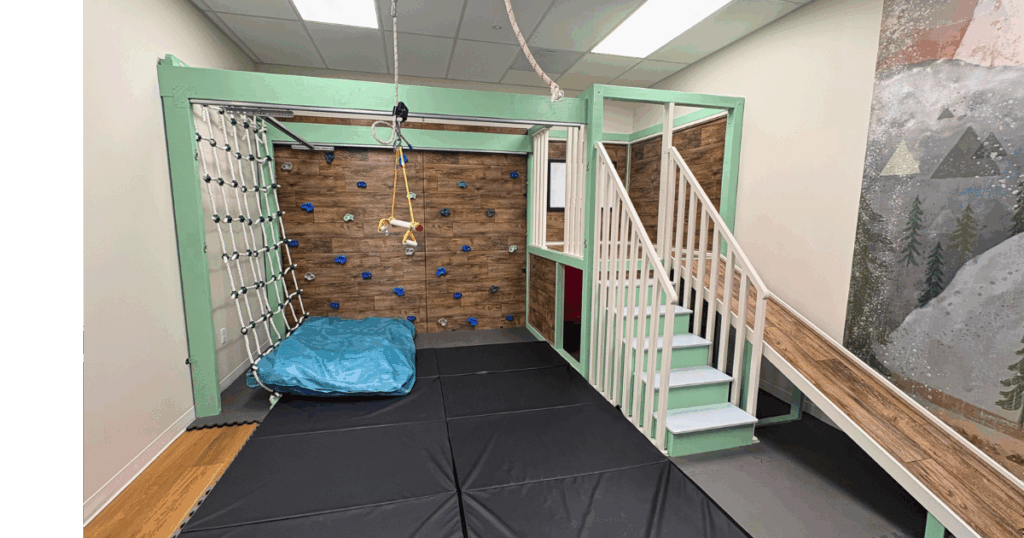
Clinics are equipped with therapeutic tools and activities that most homes simply can’t replicate, think sensory gyms, fine-motor skill stations, and advanced speech-language resources. These specialized materials give therapists more ways to engage your child, challenge their skills, and accelerate progress. Where else can your child build their own obstacle course with multiple swings, ropes, a climbing wall, and more?

3. Opportunities for Peer Interaction

In a clinic, your child can see other children working hard toward their own goals. Even without direct group sessions, watching peers model language, social skills, and cooperation can inspire confidence and motivation.
Peer interaction is especially important for building real-world communication and social skills, something that’s harder to simulate in a one-on-one home setting.

4. Clear Separation Between “Home” and “Work”

When therapy happens at home, it can be hard for children to mentally shift between playtime and “therapy time.” In a clinic setting, walking through the door signals that it’s time to learn, work, and grow. Clinic-based sessions typically operate on a regular schedule, with fewer interruptions from outside factors. This consistency is vital for building momentum in therapy and helping children reach their goals faster.
This separation also helps parents establish a healthy boundary, home remains a safe, relaxed space, while the clinic is where focused skill-building happens.

5. Access to a Collaborative Team

In a clinic, your child’s therapist can collaborate in real time with other speech-language pathologists, occupational therapists, and support staff. This teamwork means your child benefits from multiple professional perspectives, shared resources, and coordinated care, something that’s much harder to achieve in a home-based model.

6. Increased Parent Support and Education

Clinic visits create natural opportunities for parents to observe their child, connect with therapists, ask questions, and receive hands-on coaching. You will gain access to other in-clinic resources that simply aren’t part of most in-home programs.

Why This Matters for Your Child’s Development

Early intervention matters, but so does the quality and structure of the therapy your child receives. A clinic-based setting creates an environment that’s more engaging, better equipped, and more socially enriching, setting your child up for long-term success.

At SmallTalk Pediatric Therapy, we’ve seen firsthand the difference that the right setting can make. Our clinics are designed to be fun, welcoming, and filled with the tools your child needs to thrive. We work closely with families to ensure that every session moves your child closer to their goals, whether that’s clearer speech, improved fine motor skills, or greater confidence in daily activities.

If you’re considering a change in your child’s therapy setting, we’d be happy to answer your questions and show you what’s possible in a clinic-based model.

Give us a call at 619-647-6157 or send us an email at hello@smalltalkspeech.com if you’d like to get started.

From My Heart to Yours: A Grandmother’s Perspective on Children’s Therapy

By Shauna Oakes

Sometimes, when I walk through the halls in one of our clinics, I hear laughter creeping out from therapy rooms. At times I hear the frustration of a child who is just learning constructive ways to express emotions. And other times I see creative art pieces lovingly assembled by small hands or groups of children learning to work together. But every day, I feel a deep sense of gratitude that this is the work I get to be part of. 

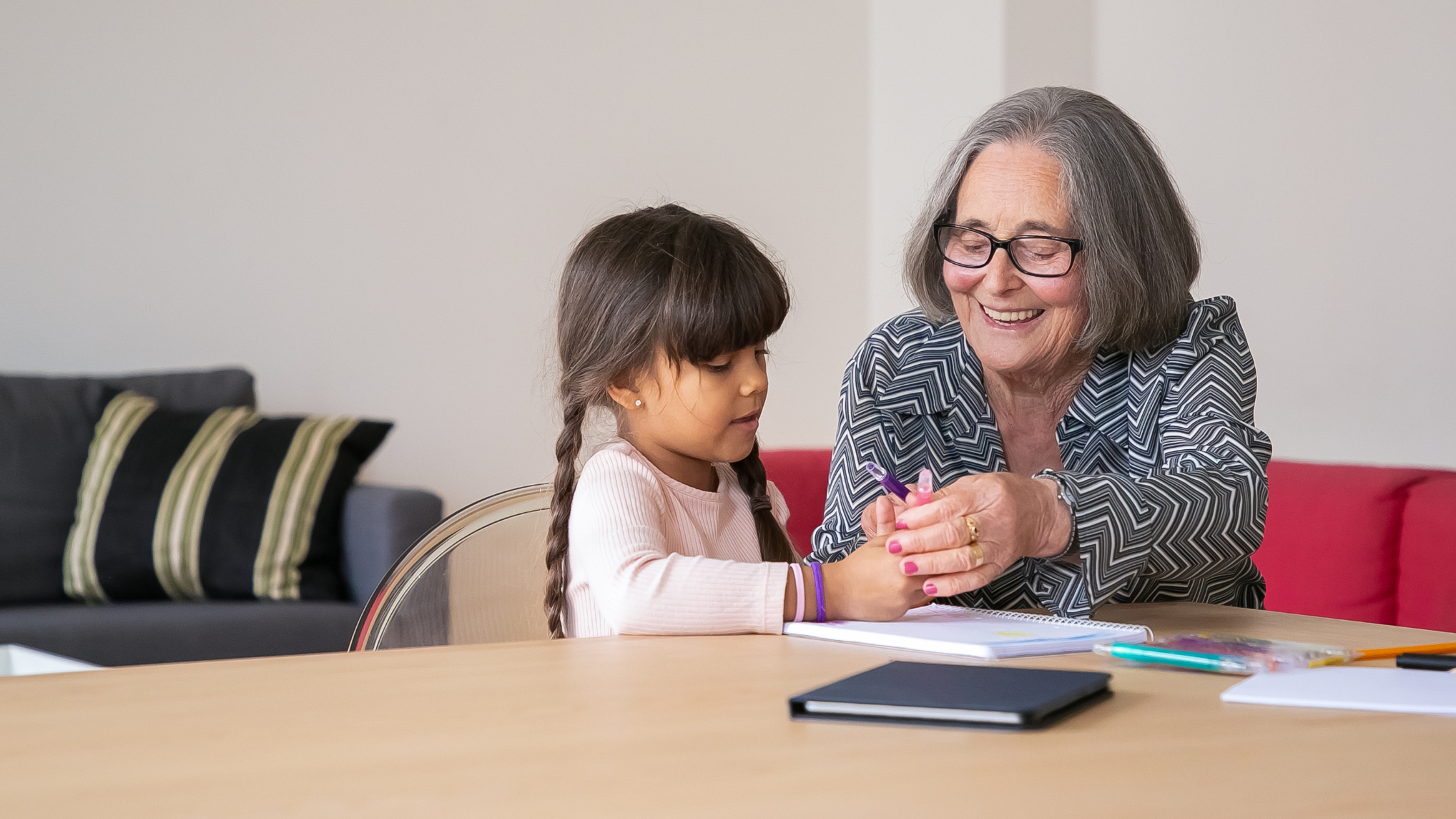
I’m a grandmother and that role defines my heart. But I’m also the administrative director here at SmallTalk Pediatric Therapy-a place that has become a second home not just for me, but for so many families navigating life with little ones who need a bit of extra support. 

From the desks I have occupied, I have seen it all: the worried looks of new parents walking in for their first visit, the nervous energy of kiddos not quite sure why they are there or what to expect. But then-over time-the incredible transformation that happens when trust, patience, and care take root. 

The Strength in Showing Up: A Message to Parents

What I want parents to know is this: you are doing enough. You are showing up for your child in a world that can sometimes feel overwhelming. You are not alone. 

As a grandmother, I often find myself watching these children as if they were my own grandbabies. I see their bravery, their moments of frustration and celebration. I watch them find their voices, their balance, their confidence and I feel so much pride, even if I’m just a tiny part of their journey. 

As a mother, I recognize the deep sacrifices you make-your time, your energy, and sometimes other interests you may have had to put on the back burner. I hear your concerns, and I love to see, hear and celebrate with you the victories, especially the ones that once felt out of reach. 

Therapy Is a Relationship, Not Just a Service

Therapy, to me, is not just a service. It’s a relationship. It’s a safe space where children are reminded that they are capable, that they matter, and that they are deeply loved for who they are not just for what they can do. 

And for the families who walk through our doors: I hope you feel that we care about not just your kiddo but we care about you. I hope you feel our belief in your child, in your family, and in the progress that sometimes comes in inches, not miles. I know the road can be long. I have witnessed it myself over and over again. But I also know how beautiful it can be when you have the right people walking it with you. 

Celebrate Every Milestone—Big and Small

So from one grandmother’s heart to another parent’s hands-thank you for trusting us. Thank you for letting us celebrate your child’s growth, step by step. You may not always see it in the moment, but there is magic in the work we can do together. And I promise, from where I sit, it is the most meaningful work I’ve ever known.

Shauna Oakes is the Administrative Director at SmallTalk.

How Virtual Speech and Language Therapy Can Support Your Family

As the world continues to expand its abilities to connect with other people, so has our ability as therapists to connect with you in ways that are flexible, effective, and fun! Virtual visits are a great method of speech-language services that ensure your child’s ability to make progress on their communication goals, while simultaneously supporting your family navigating busy schedules and lives.

What can be accomplished virtually?

There are a variety of benefits that a virtual visit can provide, much like in-person visits:

  • Assessments: Standardized assessments to determine the diagnosis of potential speech-language delays, as well as implementation of a comprehensive treatment plan are entirely achievable by meeting virtually. Virtual assessment sessions usually include a combination of standardized testing, particularly if your child is of age to participate. Another effective measure is parent interview, hearing from you exactly what your concerns and observations are of your child in their home environment.
  • Treatment: Virtual speech therapy sessions can be designed to meet the communication-specific needs of your child. Whether it is articulation, expressive/receptive language, social/pragmatic skills, or related areas, tasks developed through various online games, interactive stories, and songs/videos help support the progress of your child. Not to mention, they are designed to be fun and engaging so that your child will want to continue to attend these virtual visits!
  • Parent Education and Collaboration: Parents are just as important to the process of speech-language development as the therapists that work with your child. Virtual visits allow for private, constructive conversations to give parents suggestions, resources, and in-the-moment opportunities to demonstrate language facilitation strategies with their children right in the comfort of their own home!

So what now?

If your child might need a little guidance in speech and language, receiving services virtually is an effective way to support the communication journey of your child. SmallTalk offers virtual sessions all-week long, including several therapists, like me, who have dedicated an entire day to virtual sessions to connect with more families around the San Diego community. Please consider giving it a try – I hope to see you online!

By Alex Maloney, SLP

Catching Some Z’s

Sleep is extremely important for one’s mood, growth, and overall wellbeing, but sometimes counting sheep just isn’t enough to fall asleep. Falling asleep can be particularly challenging for children with sensory processing differences, developmental delays, or Autism. Working with your family, occupational therapists can develop an individualized plan to help your little one fall asleep and catch some Z’s.

Why Isn’t My Kid Falling Asleep?

Sleep can be challenging for multiple reasons including:

  • Sensory Sensitivities and Overstimulation: Your child may have heightened or under-responsive sensory processing, which means they can be overly sensitive to certain sights, sounds, textures, or even smells. These sensory sensitivities can make it difficult for them to relax and fall asleep. 
  • Difficulty Regulating Emotions: The transition from daytime and play to nighttime and bed can be challenging for those learning calming strategies for when transitioning can be challenging. Changes to routines from earlier in the day or known changes in future routines can also impact a child’s stress and ability to navigate through challenging emotions before they can calm to fall asleep
  • Medical Issues: Gastrointestinal problems or other sleep-related disorders such as sleep apnea could also be negatively impacting your child’s ability to fall asleep and stay asleep (Consult with your child’s pediatrician to rule out any medical issues that may be affecting sleep.)

How Occupational Therapy Can Help

  • Developing a Bedtime Routine: Having a routine helps kids wind down for the night. They know what to expect and don’t have to use additional brainpower to go from one step to the next.
  • Creating a Sensory-Friendly Sleep Environment: Occupational therapists can coach you to make your child’s sleep environment the best for them. That may mean using a sound machine, looking at the fabrics of both the child’s clothes and the sheets, and incorporating calming sensory supports prior to bedtime.

Final Thoughts

If your child is experiencing difficulty falling asleep, reaching out to an occupational therapist may be a valuable step towards finding a solution that works best for your family. With the right support, restful nights and more manageable days can be within reach.

By Lauren Fong, OTR/L

What Are Primitive Reflexes and What is Their Impact?

The Basics

Primitive reflexes are involuntary movements that develop in the womb and are present during infancy. They help your child learn to eat, reach for objects, roll over, crawl, and explore or learn their environment. Primitive reflexes are essential for survival and development in early childhood and many are often integrated by 6 months of age. Here are some examples of primitive reflexes:

  • Rooting: Your baby turns toward an object when their cheek is stroked.
  • Sucking: Your baby automatically sucks on a nipple or clean finger when inserted into their mouth.
  • Asymmetric Tonic Neck Reflex: When your baby’s head turns to one side, the arm and leg on that side extend and the opposite arm and leg flexes.
  • Tonic Labyrinthian Reflex: When your baby looks down, their arms, hips and legs want to curl in closer to the body and when they look up, their arms and legs tend to move outward.

Retained Reflexes

In some children, these primitive reflexes remain intact and are not naturally integrated. This can impact several aspects of development including:

  • Motor Planning
  • Muscle Tone
  • Postural Control
  • Balance and Coordination
  • Bilateral Coordination
  • Emotional Regulation
  • Attention
  • Vision
  • Spatial Perception

In older children, retained reflexes can result in clumsiness or increased cautiousness, difficulties attending in class, challenges with remaining seated, feeling fidgety, feeling anxious, or having emotional regulation challenges.

What Can I Do at Home?

Engaging your child in a variety of activities and exercises can help integrate retained reflexes. Activities that require crossing the body midline, using both hands together, and crawling scavenger hunts that promote independent head movements are some examples. However, if you suspect that your child may have retained primitive reflexes, consult your occupational therapist. They can best determine which, if any, reflexes your child has retained and provide an individualized treatment program for them.

By Danielle Pham, MOT, OTR/L

Big Voices in Little People: Understanding Vocal Nodules in Children

What Are Vocal Nodules?

  • Vocal nodules, often called singer’s nodules, are callus-like bumps on the vocal folds.
  • Caused by repeated misuse or overuse of the voice, they prevent the vocal folds from closing completely when producing sound.
  • Unlike vocal polyps (blister-like growths that can form from a single event, e.g., yelling), nodules develop gradually over time.
  • Their size can range from a pinhead to a split pea and, if untreated, can lead to further vocal strain and damage.

Common Causes of Vocal Nodules

  • Vocal Abuse Behaviors in Children:
    • Excessive talking for extended periods.
    • Loud vocalizations like shouting, screaming, whining, cheering, or crying
    • Frequent coughing or throat clearing
    • Strained vocal sounds (e.g., imitating vehicles, animals, or superheroes)
  • Vocal Misuse and Other Contributing Factors:
    • Poor breath support during speaking or singing.
    • Straining the voice or using incorrect pitch or volume outside of one’s natural range
  • Environmental and health factors:
    • Chronic upper respiratory infections or allergies
    • Acid reflux
    • Exposure to second-hand smoke or air pollution, which exacerbates swelling and inflammation

Healthy Vocal Practices and Alternatives

To reduce strain and help nodules heal, children should follow these guidelines:

  • Avoid loud talking
    • Family members should take turns speaking so that the child does not need to talk over other members in the family to be heard. Also, the child should walk closer to the listener instead of yelling from a distance.
  • No screaming when angry
    • Offer alternatives like punching a pillow or tearing paper.
  • Stop imitating loud sounds (e.g., animals, motors, superheroes)
    • Use a gentle humming sound instead.
  • Refrain from talking over background noise
    • Turn off TVs or radios during conversations to avoid shouting.
  • Replace throat clearing with a hard swallow
    • This clears secretions without damaging the vocal folds.
  • Pause singing for now
    • Encourage playing a musical instrument or using a whistle instead.
  • Stay hydrated
    • Drink plenty of water and avoid caffeinated drinks. Caffeine causes dehydration, making vocal folds more prone to injury.

Encouraging Compliance

  • Positive reinforcement works best. Use tools like sticker charts to track progress.
  • Offer gentle reminders rather than nagging if rules are broken.

By adopting these practices with consistent effort and patience, vocal nodules will typically heal over time. Your speech-language pathologist can assist your child in regaining healthy vocal habits and preventing future issues.

By Kathleen Winger, M.S., CCC-SLP

Valentine’s Day Activities for Speech and OT

As Valentine’s Day approaches, we’re excited to share some heartwarming and therapeutic activities that not only celebrate the season of love but also contribute to the growth and development of our clients. Join us on this journey of combining affection with effective therapy!

Speech and Language Therapy

Valentine’s Day provides a unique opportunity to explore the language of love. Speech and language therapy can be both educational and enjoyable as we engage our clients in activities that focus on expressing emotions, social interactions, and building meaningful connections through communication.

Activity Ideas:

  • Love Letter Writing: Encourage clients to express their feelings by writing or dictating love letters. This activity enhances language skills and emotional expression. 
  • Conversation Hearts Challenge: Use conversation hearts candy with words or phrases related to communication goals. Clients can create sentences or engage in conversations using these sweet treats.

OT- Sensory

Occupational therapy often involves sensory activities that stimulate and enhance sensory processing. This Valentine’s Day, let’s explore sensory-rich experiences that promote engagement and development.

Activity Ideas:

  • Scented Sensory Bins: Create sensory bins with Valentine-themed scents like roses, chocolate, or strawberries. Clients can explore different textures and engage their senses.
  • Heart-shaped Stress Balls: Make heart-shaped stress balls filled with different textures to provide tactile stimulation. This activity is great for hand strength and stress relief.

OT- Fine Motor Fun

Fine motor skills are crucial for daily activities, and what better way to practice than with Valentine-themed fine motor activities?

Activity Ideas:

  • Valentine’s Day Crafts: Engage clients in crafting activities like making heart-shaped cards, cutting out paper hearts, or creating tactile crafts. This enhances fine motor coordination.
  • Cupid’s Arrow Game: Use a bow and arrow game to target various objects. This activity improves hand-eye coordination and fine motor precision.

Valentine’s Day is not just about chocolates and flowers; it’s about fostering growth, connection, and joy through therapeutic activities. We invite you to join us in celebrating the language of love and the development of essential skills that make every day special for our clients. Happy Valentine’s Day!

By Amy Rawlings, MA, CCC-SLP

Tips for Stuttering and the Holidays

For many people, October-December is the most wonderful time of the year filled with good food and company. But for others, this time of the year can be busy and stressful, overfilling our internal buckets. This bucket analogy is frequently used by stuttering specialist, Dr. J. Scott Yaruss, and illustrates the idea that many factors can affect stuttering, including child factors (genetics, temperament), interpersonal stressors (life changes, fast-paced lifestyle), and communicative stressors (competition for talking time, frequent interruptions). We like to encourage families to try to lower the level of the bucket, since we all communicate best under the least amount of stress and pressure.


Here are some practical ways to try to pour out some of the bucket’s contents when it gets filled
with the uncontrollable holiday bustle:

1. Include some space and time for quiet as a family

When our homes are filled with family and friends, especially those we haven’t seen in a while, conversations can be found at every corner. This can take a toll on those who stutter who might not enjoy, and may even anxiously anticipate, constantly conversing. Before a big gathering…

  • Do: Enjoy leisure activities together that don’t require as much talking like coloring, reading, puzzles, legos, play-doh, etc.
  • Try to avoid: Activities that encourage pressure, speed, and are verbally taxing such as competitive board games.

2. Keep the joy, lower the excitement

Children may have a more difficult time speaking when worked up in either a positive or negative way. Still speak about the great time that will be had during the holidays, but try to limit ramping up emotions and building a lot of anticipation.

  • Do: Speak positively “I love getting to try so many different kinds of candy on Halloween.”
  • Try to avoid: Speaking to heighten emotions “Aren’t you excited to show off your new costume?!”

3. Practice stressful areas

You know your child best, and when and where they communicate their best. You know if your child is a perfectionist, and can anticipate that when other children come over, win games and take toys, yours may be very thrown off. Or, you may know your child to be on the shyer side making trick-or-treating a difficult activity. Practicing these scenarios with people that are familiar to the child and in a controlled environment can help transfer readiness and emotional preparedness for the more spontaneous encounters.

  • Do: Talk about emotions! Encourage losing and still having fun. Talk about how nice it feels when your child shares a toy with you. Practice knocking on bedroom doors and saying “trick or treat!”. Have your child switch roles with you in each scenario to be the winner/loser, sharer/taker, etc.
  • Try to avoid: Rewarding only winning and reacting negatively when things don’t go perfectly.

4. Encourage and advocate

Our children may be meeting visiting guests for the first time, who may bring up that they stutter. This is a great opportunity to advocate for your child and to address the situation head on. Speaking openly and positively about stuttering helps children feel empowered to be themselves, and reduces the chance of children developing avoidance behaviors.

  • Do: Learn about stuttering with your child (myths/facts, famous people who stutter, etc.) to build their confidence and eliminate negative associated feelings about stuttering. Acknowledge the stutter, acknowledge that he/she/they is/are trying to find strategies to speak smoother through therapy, talk about your child’s strengths.
  • Try to avoid: Avoiding the conversation of stuttering and using vocabulary that portrays it as negative such as “fixing” or “correcting” it.

Feel free to reach out to your Speech-Language Pathologist for additional suggestions relevant to your child and their plan of care. For more stuttering related-resources, check out stutteringtherapyresources.com.

By Mariel Manuel, MS, CCC-SLP

Gestalt Language Processing

Let’s unpack some buzz words that you may have been hearing lately:

“Echolalia” is the repetition of language spoken by others. It can be repeated either immediately or after some delay. With echolalia, language is stored as a “chunk”, or a whole unit.

“Scripting” is another term that refers to echolalia. “To infinity…and beyond!” is an example of a script from media. “See you later alligator” is an example of a script that may be heard in conversation. When children are “scripting”, they may be observed reciting dialogue from a TV show, singing lyrics from a YouTube song, or copying phrases they’ve heard other people use. The message is often identical to the source where they heard it, and has the same melody.

“GLP” stands for Gestalt Language Processing. This is a form of language development where children learn the meaning of language in chunks first, then over time learn to break the chunks down and formulate their own original language.

Let’s bust some myths:

Are most autistic children GLPs? YES!

Does being a GLP automatically mean a child is on the Autism Spectrum? NO! Some neurotypical children learn language via chunks as well. 

Unsure if your child may be a “GLP”? Here are some common signs:

1. They echo back what you say or the last part of phrases you say, without appearing to process the language.

2. They have difficulty answering questions in conversation.

3. They like to hum or sing songs rhythmically. 

4. They have a preference for intonation-rich sound input, such as music or videos.

5. They replay certain portions of video clips over and over.

6. They like to repeat play scenes in the same way over and over.

7. They like to play with the WHOLE set – if a figurine is missing, they are not pleased. They are seeing the world in a “gestalt” way.

8. They like to label objects they see around them and can recite their ABCs or count 1-2-3, though have trouble using their language to ask for help or communicate other important functions. 

I think my child is a GLP… Now what?

1. Find a Speech-Language Pathologist near you that has been trained in Gestalt Language Processing. They can help determine which stage of the Natural Language Acquisition framework your child is in and give tailored advice on how to support your child’s language development at home. 

2. Follow social media accounts such as @meaningfulspeech and @bohospeechie, which provide brief, useful posts related to GLP.

3. Take a look at free resources on the website www.meaningfulspeech.com. If you have extra time, consider taking Meaningful Speech’s parent friendly course. 

4. Check out Marge Blanc’s book, “Natural Language Acquisition on the Autism Spectrum. The Journey from Echolalia to Self-Generated Language.”

Things to Keep in Mind:

  • Echolalia is not just a “stimming behavior” that should be ignored, decreased or extinguished… Echolalia communicates. 
  • We should acknowledge children’s scripts by nodding our heads or repeating back what they say, even if we are unsure what they mean.
  • Speech therapists are here to help! 

By Julia Navarra MA CCC-SLP

Link copied to clipboard!