Holiday Travel Tips for Children with Sensory Needs

Holiday travel can bring excitement and a bit of chaos. For children with sensory needs, unfamiliar environments, loud sounds, and changes in routine can make the experience overwhelming. At SmallTalk Pediatric Therapy, we’ve helped many families prepare for smooth and successful trips by planning ahead, creating structure, and bringing familiar tools from home. Whether you’re heading across town or across the country, these travel tips can help make your journey calmer, happier, and more connected.

1. Prepare Your Child with Visuals and Stories

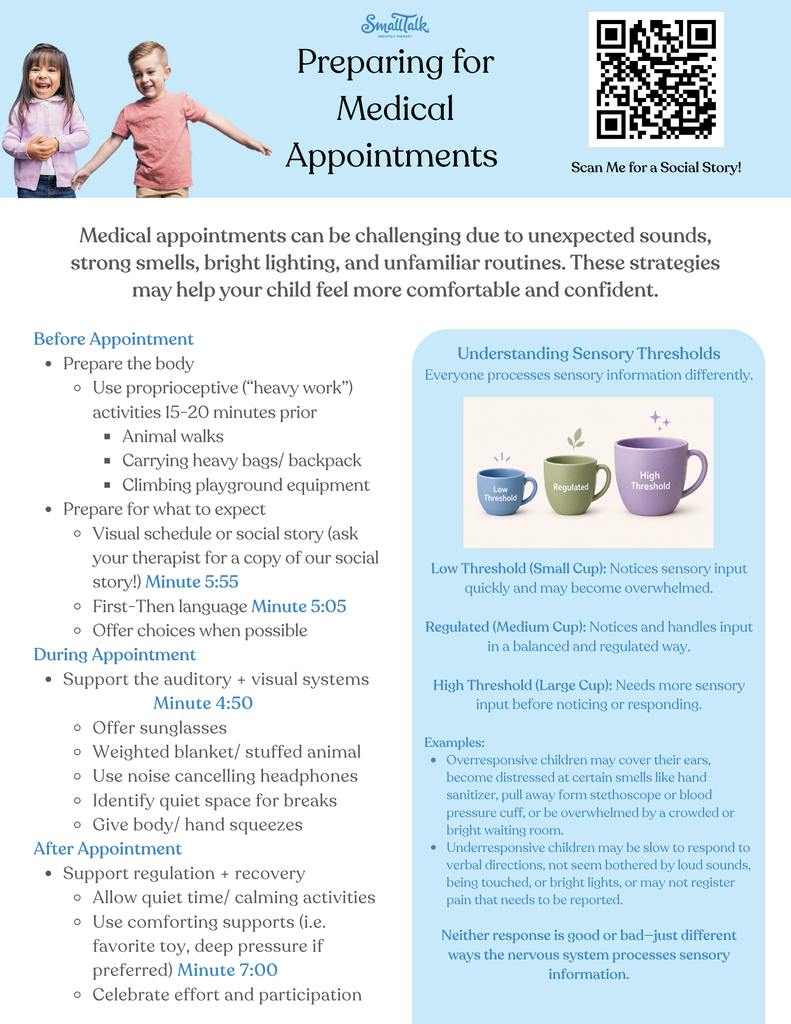
Children who thrive on routine often benefit from knowing what to expect before a trip. Creating a simple visual schedule or social story can help your child understand each step from packing, driving, flying, arriving, and unpacking. Research shows that using visuals can help reduce anxiety and improve understanding of transitions in children with developmental differences.

Walk your child through what the day might look like, using photos or drawings. You might even watch a short video about airports or road trips together to make the process more predictable and less intimidating.

2. Build a Sensory Travel Kit

Long trips can expose your child to new smells, sounds, textures, and sights, all of which may be overstimulating. A sensory travel kit gives your child tools to regulate and find comfort along the way.

Try including:

  • Noise-canceling headphones
  • A small weighted lap pad or favorite blanket
  • Sunglasses or a hat to reduce bright lighting
  • Fidget toys or chewy jewelry
  • Familiar snacks and a water bottle

Every child’s sensory system is unique, so let them help choose what to pack. Having control over their environment even a little can make travel feel more manageable.

3. Choose Travel Times and Routes Thoughtfully

Timing can make a big difference. Traveling during quieter hours, such as early mornings or mid-week days, often means fewer crowds and shorter lines. When driving, plan frequent rest stops where your child can stretch, jump, or move before getting back in the car.

It can also help to avoid rushing. Extra time at each step, boarding, restroom breaks, or security, gives everyone breathing room and helps prevent meltdowns from stress or fatigue.

4. Maintain Familiar Routines

Even away from home, maintaining small pieces of your regular routine can help your child feel grounded. Try to keep consistent meal and sleep times, and bring familiar bedtime items like a favorite stuffed animal or book.

Keeping a short bedtime ritual, such as reading a story together, is not just comforting, it also helps your child transition more easily to sleep in new environments. Predictability builds confidence and regulation.

5. Plan for Quiet Spaces and Calm Breaks

During busy holiday events, identify quiet spots in advance where your child can take breaks. Many airports, museums, and large public spaces now offer sensory-friendly rooms or low-stimulation areas.

If you’re visiting relatives, ask ahead if there’s a calm room or corner your child can use when they need downtime. You can also establish a “quiet signal” with your child, a hand gesture or phrase that means, “I need a break.” Giving them a way to communicate their needs can prevent sensory overload before it escalates.

6. Use Travel as a Language and Learning Opportunity

Every part of your journey can help build speech, language, and social skills. Narrate what’s happening: “We’re putting our bags in the car,” or “The airplane is taking off!” Describe what you see, hear, and feel to model rich vocabulary.

Ask open-ended questions:

  • “What do you think we’ll see when we land?”
  • “Can you tell me what’s outside your window?”

These small interactions encourage language use in real-world situations. For children receiving speech or occupational therapy, this kind of meaningful play and communication helps generalize skills beyond the clinic.

7. Be Flexible and Celebrate Small Wins

Even the best-planned trips come with surprises, delays, detours, or changes. Flexibility is key. Offer praise for small victories: getting through a noisy terminal, waiting patiently in line, or using coping tools independently. A calm, encouraging tone helps your child feel secure, even when things don’t go perfectly. Remember that your goal isn’t a flawless trip, it’s connection, confidence, and fun along the way.

Holiday travel with children who have sensory needs doesn’t have to be stressful. With thoughtful preparation, familiar routines, and a bit of flexibility, you can create positive, memorable experiences for your family. At SmallTalk, we support San Diego families, whether at our clinics in La Mesa, Mission Valley, and Scripps Ranch, or through virtual sessions, so your child can keep growing and thriving wherever the season takes you.

Safe travels and happy holidays!

Would you like to start therapy or schedule a virtual appointment during this holiday season?

Contact Form

  • This field is for validation purposes and should be left unchanged.

Preparing for Insurance Changes in the New Year: A Guide for Parents

Parenthood is a rewarding journey filled with joy, milestones, and countless decisions. One of the most important (and often overlooked) responsibilities is understanding your insurance coverage, especially when it comes to services like speech and occupational therapy. With a new year just around the corner, now is the perfect time to review your benefits, make any updates, and ensure your child continues receiving the support they need.

Why It Matters

Insurance coverage can change from year to year, especially if you switch plans during open enrollment. Benefits for services like therapy may vary, and delays in updating or confirming your benefits can interrupt care. That’s why we’re encouraging all families to check their insurance details and notify us of any changes as soon as possible.

Insurance Terms Made Simple

Insurance language can be confusing, so here’s a quick glossary to help:

  • Insurance Policy: A contract outlining coverage, terms, and limits.
  • Coverage: The medical services your plan will pay for.
  • Premium: Monthly amount paid to have insurance.
  • Deductible: What you must pay before insurance starts covering costs. This amount will typically reset in the new year.
  • Coinsurance: The percentage of costs you pay after your deductible is met (e.g. 30%).
  • Copay: A set fee paid at each visit (e.g. $25 per session).
  • Out-of-Pocket Maximum/Catastrophic Cap: The most you’ll pay in a year for covered services (excluding premiums) — after which insurance pays 100%.

Steps to Prepare for the New Year

1. Review Your New Plan

Start by checking if your plan is changing in the new year. If anything about your plan has changed, or you are unsure, please send us a copy of your new insurance card to frontoffice@smalltalkspeech.com.

2. Understand Your Costs

Check what your benefits and patient responsibility are for speech therapy and occupational therapy. This information is typically listed in the “Benefits” section of your plan summary. Ask your insurance provider about:

  • Copayments
  • Deductibles
  • Coinsurance
  • Out-of-pocket maximums

3. Check for In-Network Providers

Is SmallTalk in-network? In-network therapists generally result in lower out-of-pocket costs.

4. Get a Referral if Needed

Some plans require a doctor’s referral before therapy services can begin. Check with your pediatrician and your insurer.

5. Ask About Pre-Authorization

Certain services require pre-approval before coverage begins. Skipping this step could result in denied claims.

6. Know Session Limits & Rules

Plans may place limits on how many sessions your child can attend or may limit coverage based on diagnosis.

7. What to Do if a Claim is Denied

Denied claims can often be appealed. Don’t give up! Ask your insurer for steps to initiate an appeal if needed.

8. Explore School-Based Services

Your child’s school may also offer therapy services, which can be used in conjunction with or as an alternative to private therapy.

9. Keep Communication Open

Share any insurance changes with us right away so we can help avoid coverage gaps and ensure continuity of care. You can contact us at frontoffice@smalltalkspeech.com or 619-647-6157 ext. 7 if you have any insurance updates or have any questions.

How to Check Your Benefits

When you call your insurance company, here are some helpful questions to ask:

  • Is SmallTalk Pediatric Therapy in-network with my plan?
    • You may need our NPI: 1619298791
  • What are my benefits for these CPT codes?
    • Speech Therapy: 92523, 92507
    • Occupational Therapy: 97166, 97168, 97530
  • Is there a deductible that applies, and how much of it has been met?
  • What is my copayment per therapy session?
  • Are there session limits for speech or occupational therapy?
  • Do I need pre-authorization?
  • Are there any diagnosis exclusions?

Always call the Member Services number on the back of your insurance card. If you are having trouble finding it, you can also try the numbers below:

Insurance ProviderMember Services Number
Anthem Blue Cross (CA)1‑800‑967‑3015
Blue Shield of CA1‑800‑443‑5005
Blue Shield Federal (FEP)1‑800‑411‑2583
Kaiser Permanente1‑800‑464‑4000
Sharp Health Plan1‑858‑499‑8300
TRICARE West (TriWest)1‑888‑874‑9378
UnitedHealthcare1‑800‑577‑8539

Final Thoughts

Understanding and preparing for insurance changes doesn’t have to be stressful. Taking the time now to review your benefits, ask the right questions, and share updates with us ensures that your child’s therapy can continue uninterrupted. Please contact us at frontoffice@smalltalkspeech.com or 619-647-6157 ext. 7 if you have any insurance updates or have any questions. We’re here to support you and your family every step of the way.

Let’s work together to make the new year a successful one for your child and their care.

Inclusive Activities and Resources for Kids in San Diego

At SmallTalk Pediatric Therapy, we believe that progress doesn’t stop at the clinic door. For many families, the most meaningful growth happens when therapy skills carry over into everyday life, whether that’s at the park, in a museum, or through a community program. Luckily, San Diego is full of inclusive activities and resources that align beautifully with speech and occupational therapy goals.

Here are a few local favorites that we often recommend to families:

1. Inclusive Playgrounds and Outdoor Spaces

San Diego has made great strides in creating parks that welcome children of all abilities. Places like Mission Bay, Waterfront Park downtown, and Balboa Park offer wide, accessible play structures and open spaces that encourage movement, social interaction, and imaginative play. From an OT perspective, these playgrounds provide opportunities for climbing, balancing, and building gross motor skills. For speech, they create natural opportunities for children to practice communication in play with peers.

2. Museums with Sensory-Friendly Programs

Several local museums host inclusive events designed with children’s sensory needs in mind. The Fleet Science Center and The New Children’s Museum both offer accessibility programs, and the San Diego Children’s Museum of Discovery provides hands-on learning that is both engaging and adaptable. Visiting these environments can help children generalize skills such as, following directions, asking questions, or practicing turn-taking, in real-world settings.

The New Children’s Museum

3. Inclusive Recreation and Sports Programs

The City of San Diego Parks & Recreation Department’s Therapeutic Recreation Services offers year-round programs for children with developmental needs. Families can also explore adaptive play opportunities like Play My Way and TOPSoccer, both of which emphasize inclusion and fun. These types of organizations are a wonderful complement to therapy, giving children the chance to build confidence and social skills in a supportive environment.

4. Sensory-Friendly Events and Entertainment

Local theaters and organizations host sensory-friendly performances and movie showings, such as AMC’s Sensory Friendly Films and productions at some community theaters. These events are designed so children can move, make noise, or take breaks without worry.

5. Community Support and Learning Opportunities

Organizations like the National Foundation for Autism Research provide resources and host events, while programs like Learning for All offer educational therapy that can complement speech and ot. Local libraries also frequently offer inclusive storytimes that support early literacy and language skills, perfect for families who want to carry speech therapy goals into daily routines.

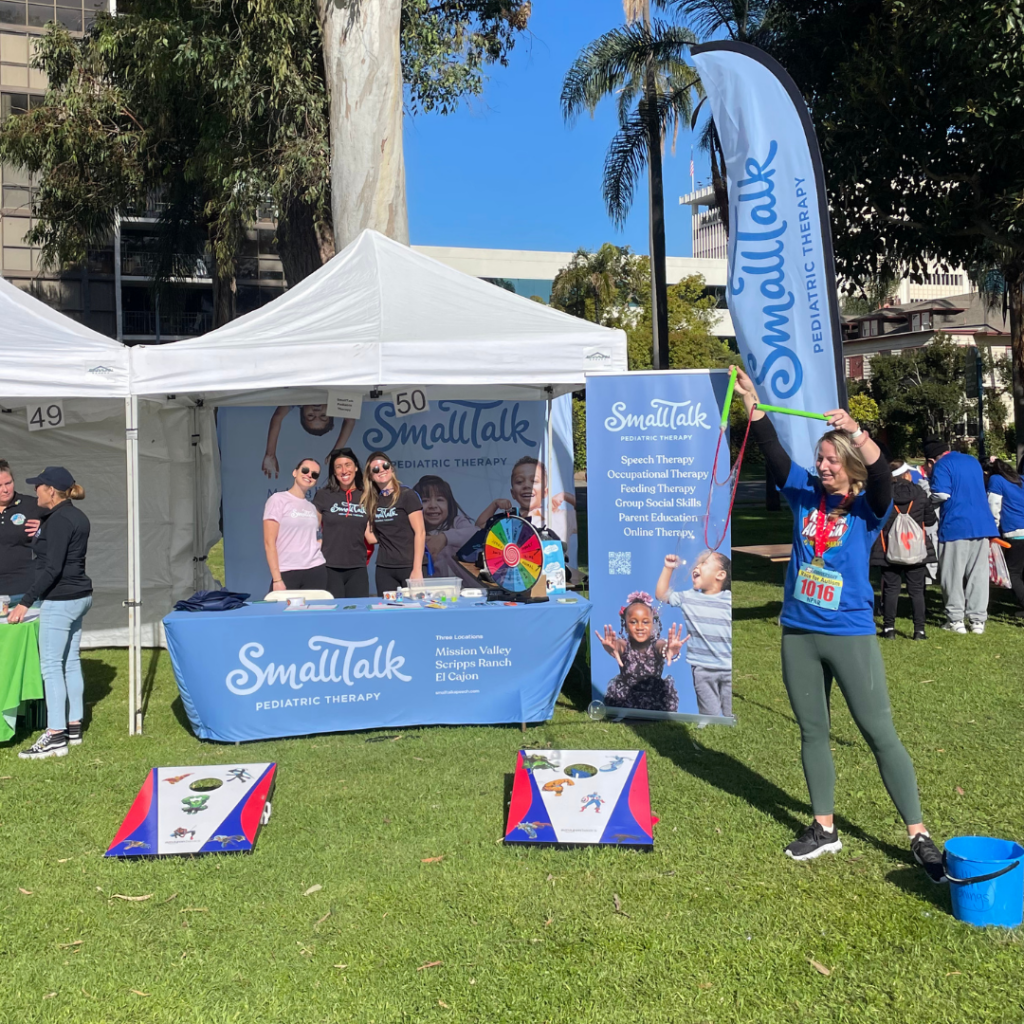
SmallTalk attends the Race for Autism 2025

Why These Resources Matter

At SmallTalk, we see firsthand how important it is for therapy to connect with everyday life. When a child practices communication at storytime, strengthens motor skills on a playground, or builds social confidence on a team, they’re not just learning, they’re living the skills we work on in therapy.

We encourage families to explore these inclusive opportunities around San Diego. They can make a big difference in helping children feel successful, connected, and celebrated both inside and outside the clinic.

Looking for more information about how SmallTalk Pediatric Therapy can help your kiddo grow? Give us a call at 619-647-6157 or email us at hello@smalltalkspeech.com and we can give you more information or schedule an evaluation.

How Virtual Speech and Language Therapy Can Support Your Family

As the world continues to expand its abilities to connect with other people, so has our ability as therapists to connect with you in ways that are flexible, effective, and fun! Virtual visits are a great method of speech-language services that ensure your child’s ability to make progress on their communication goals, while simultaneously supporting your family navigating busy schedules and lives.

What can be accomplished virtually?

There are a variety of benefits that a virtual visit can provide, much like in-person visits:

  • Assessments: Standardized assessments to determine the diagnosis of potential speech-language delays, as well as implementation of a comprehensive treatment plan are entirely achievable by meeting virtually. Virtual assessment sessions usually include a combination of standardized testing, particularly if your child is of age to participate. Another effective measure is parent interview, hearing from you exactly what your concerns and observations are of your child in their home environment.
  • Treatment: Virtual speech therapy sessions can be designed to meet the communication-specific needs of your child. Whether it is articulation, expressive/receptive language, social/pragmatic skills, or related areas, tasks developed through various online games, interactive stories, and songs/videos help support the progress of your child. Not to mention, they are designed to be fun and engaging so that your child will want to continue to attend these virtual visits!
  • Parent Education and Collaboration: Parents are just as important to the process of speech-language development as the therapists that work with your child. Virtual visits allow for private, constructive conversations to give parents suggestions, resources, and in-the-moment opportunities to demonstrate language facilitation strategies with their children right in the comfort of their own home!

So what now?

If your child might need a little guidance in speech and language, receiving services virtually is an effective way to support the communication journey of your child. SmallTalk offers virtual sessions all-week long, including several therapists, like me, who have dedicated an entire day to virtual sessions to connect with more families around the San Diego community. Please consider giving it a try – I hope to see you online!

By Alex Maloney, SLP

Great Games for Gifts from a Speech Therapist

…and fun ways to target speech and language

The holiday season brings festive lights, cozy family time, and a welcome break from busy school routines. With kids home and more time together, it’s the perfect opportunity to slow down, unplug, and connect through play. Whether you’re looking for thoughtful gift ideas or fun ways to spend screen-free time at home, games can be a wonderful way to keep your child engaged and learning.

As a speech therapist, we love using games in our sessions because they make learning fun and meaningful. Play is one of the most powerful ways to support speech, language, and overall development and it doesn’t have to stop when therapy ends. Below are some of our favorite games that bring joy and skill-building together this holiday season along with goals you can target while you play!

Pop the Pig (ages 4+, 2-6 players) 

  • Turn taking
  • Two step directions (e.g., roll the dice, then feed the pig; feed the pig, then press his head)
  • Speech sounds (e.g., say a word before every turn)
  • Simple “what” questions (e.g., what color did you get?; what number is it?)

Feed the Woozle (ages 3-6, 2-5 players)  

  • Following directions 
  • R words in phrases (e.g., chocolate covered flies, moldy macaroni, spider egg pudding)
  • L words in phrases (e.g., liverwurst popsicle, lemon flavored underwear, iced garlic
  • S words in phrases (e.g., sugar coated sardines, baseball sandwich, soggy sausage)

Zingo (ages 4+, 2-6 players)  

  • Naming objects in pictures
  • Turn taking 
  • Answering yes/no questions for facts (e.g., do you have a tree?)

Tell Tale (ages 5+, 1-8 players)  

  • Using story telling elements 
  • Maintaining conversation topic
  • Answering wh- questions
  • Retelling stories

I Spy Eagle Eye (ages 5+)  

  • SP blends in phrases (e.g., I spy…)
  • Naming objects in pictures 
  • Where questions (e.g., where is it?)

By Jess Wi MS, CCC-SLP

The holidays are the perfect time to reconnect, play, and make meaningful memories together. Whether you choose a game that encourages conversation, teamwork, or problem-solving, each moment of play can support your child’s speech, language, and developmental growth in a natural, joyful way.

At SmallTalk Pediatric Therapy, we believe that learning happens best when it’s fun. If you’d like more ideas for play-based learning or have questions about your child’s progress, our teams in La Mesa, Mission Valley, and Scripps Ranch are here to help.
Link copied to clipboard!